Every year someone claims “this is the most unpredictable season ever.” Usually it’s an exaggeration. This year, it isn’t.
For years, international League of Legends has followed a script: Asian teams — Korea and China — sit at the top, Europe fights for scraps, and North America shows up mostly to lose in the group stage. In 2026, that script got thrown out entirely. This is the story of how it happened, tournament by tournament, upset by upset.
First Stand: The Warning Shot
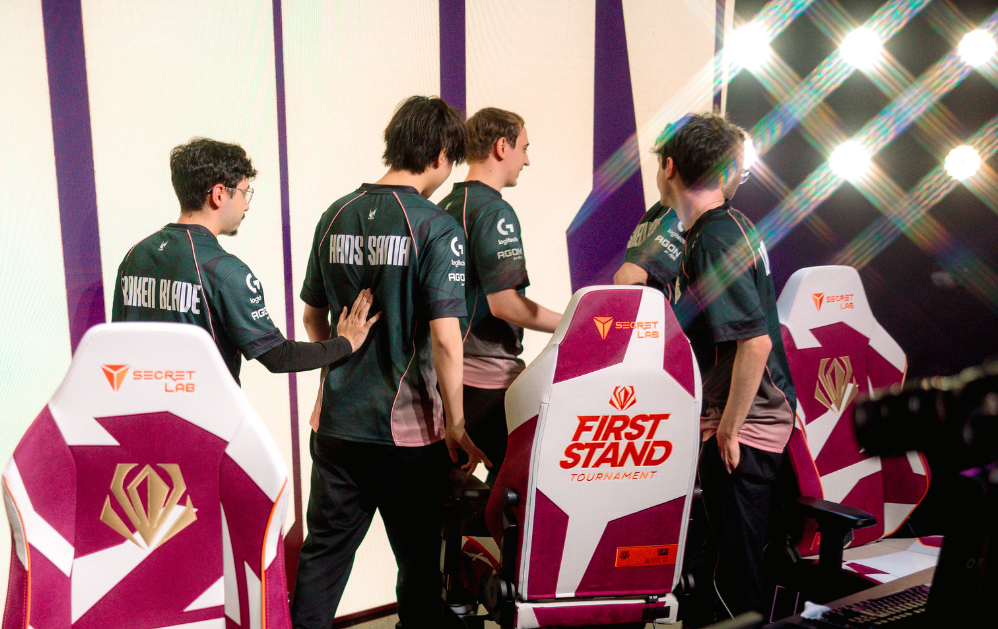
The chaos actually started at the very first international event of the year. At First Stand, G2 Esports didn’t just beat the LCK — they embarrassed it, going a perfect 6-0 against both Fear X and Gen.G. It was the kind of result that, in past years, would have been unthinkable. Nobody quite knew what to make of it. Was this a fluke, or a sign of something bigger?
The Regular Season: Business as Usual
For a moment, it looked like normal service had resumed. The domestic splits played out mostly as expected: G2 and Karmine Corp battled for the LEC title, Lyon dominated North America, HLE established itself as the best team in Korea, and BLG claimed another LPL championship despite somehow losing to the worst team in the league along the way. Nothing here suggested the First Stand result was anything more than an early-season anomaly.
MSI: A Slow Start, Then Chaos
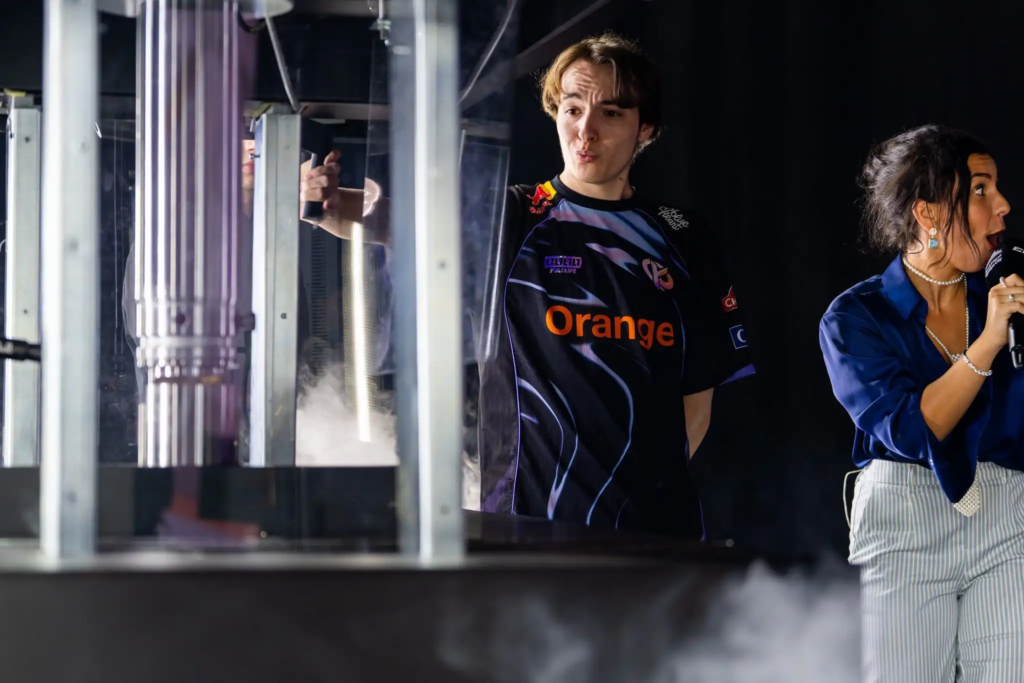
MSI began in the most boring way imaginable. Series after series ended 3-0, decided before they were even played. The only real surprise in the early rounds came when Team Liquid swept Karmine Corp 3-0 — a result that raised eyebrows given how closely matched the two sides were supposed to be.
Then the main stage arrived, and the upsets didn’t stop coming.
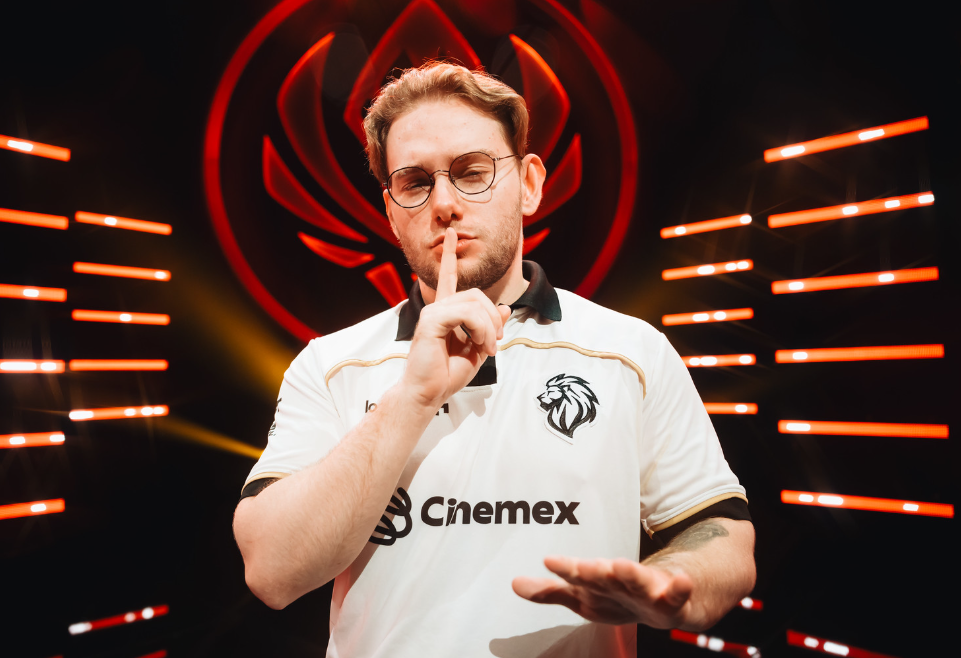
First, G2 pulled off a reverse sweep against Top Esports, the LPL’s second seed. Then Team Secret Whales eliminated Top Esports as well, this time 3-1. But the two biggest shocks of the entire tournament landed back to back, on consecutive days: on day one, G2 eliminated T1 3-1 — the best team in the world, beaten by a European side. On day two, Lyon turned around and swept that same G2 team 3-0.
Think about that for a second. G2 was good enough to beat the greatest team in League of Legends history one day, and then bad enough to get run over by a North American team the very next. That inconsistency, at that level, on that stage, was almost impossible to explain — and it perfectly captured what this entire year has been about.
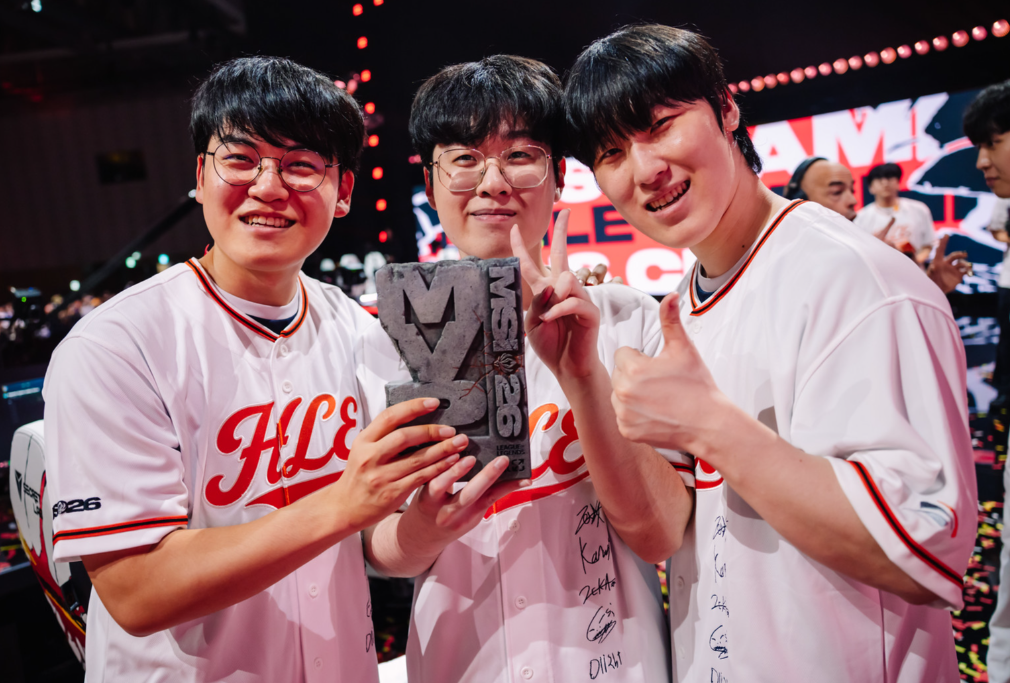
BLG, meanwhile, beat HLE 3-1 in the winners’ bracket, which made them the clear favorite heading into the grand final. And yet HLE flipped the script, beating BLG 3-2 in the final to become MSI champions. Even the “obvious” storyline of the tournament didn’t play out the way it should have.
Esports World Cup: The Script Gets Torn Up Completely
If MSI proved that anyone could beat anyone on a given day, the Esports World Cup proved it wasn’t a one-tournament fluke.
The reigning MSI champions, HLE, were eliminated by T1. Fine — T1 reasserting themselves felt almost normal. What happened next didn’t.
Karmine Corp — a team that had just been swept 0-3 by both T1 and Team Liquid at MSI — turned around and eliminated T1 2-1, sending the MSI runner-up favorites home and marching into the grand final. Read that again: a team that couldn’t win a single game against T1 or Team Liquid a few weeks earlier went on to beat T1 in a best-of series at the very next international event.
On the other side of the bracket, an even wilder story was unfolding. Dplus KIA — a team that hadn’t qualified for a single international event yet this year, and that finished the LCK regular season as the 4th or 5th seed — eliminated MSI runner-up BLG, and then eliminated Gen.G, a team that had a long-standing head-to-head advantage over DK in the LCK. On paper, neither result should have happened.
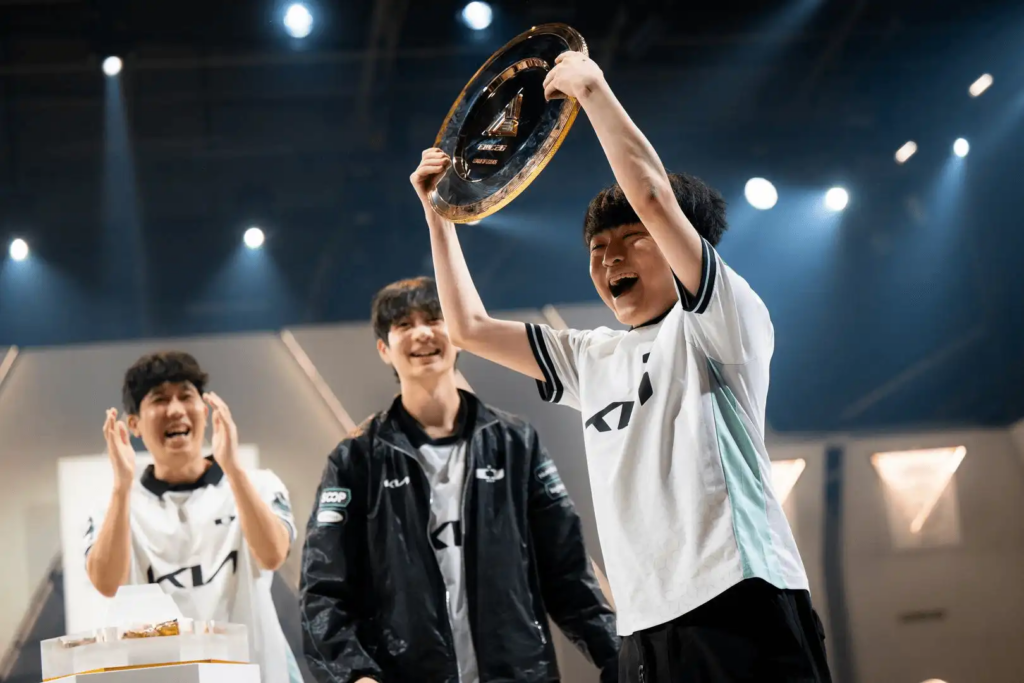
The grand final brought the story full circle: Dplus KIA swept Karmine Corp 3-0 to become Esports World Cup champions — a team nobody had on their radar three months earlier, now standing at the top of one of the year’s biggest international events.
So What Can We Expect Next?
With all of that chaos behind us, the Summer Split is about to kick off across every major region — and the question on everyone’s mind is whether this new era of parity carries over into domestic play, or whether the old hierarchies reassert themselves at home.
In the LEC, Karmine Corp and G2 look set to keep fighting it out at the top, much like they did in Spring. Over in the LCS, Lyon enters as the clear favorite to keep dominating North America after their statement run internationally. The LCK is shaping up to be the most competitive region of all: T1, Gen.G, HLE, and Dplus KIA all look genuinely strong, and after a Spring split full of upsets between exactly these teams, it’s hard to call a clear favorite among them. The LPL, on the other hand, looks the most settled of the four — BLG remains the clear team to beat.
But the split that really matters is what comes after: Worlds. Given everything we’ve just seen — G2 beating T1, Karmine Corp beating T1 again months later, Dplus KIA coming out of nowhere to win an international trophy — it’s hard to imagine Worlds playing out quietly. The LCK still walks in as the clear favorite to lift the trophy, as it usually does. But if this year has taught us anything, it’s that LEC, LCS, and LCP teams are now genuinely capable of taking down some of the best teams the LCK has to offer — and after First Stand, MSI, and the Esports World Cup, nobody should be surprised if it happens again on the biggest stage of the year.
Why This Matters
Put it all together and the picture is clear. This year, European teams like G2 and Karmine Corp eliminated the best team in the world. A North American team dominated its own region and then swept the reigning MSI finalist runner-up. A Korean fourth seed went from “hasn’t qualified for anything” to international champion in a matter of weeks. And the eventual champions at two different tournaments — HLE at MSI, DK at EWC — weren’t even the favorites heading into their respective finals.
For years, the conversation around international LoL was about the gap between regions — how far behind Europe and North America were compared to Korea and China. This year didn’t just narrow that gap. It made the entire idea of “gap” feel outdated. Any team, from any region, on any given day, can beat anyone else. That unpredictability is exactly what makes this the most exciting era League of Legends esports has ever seen.